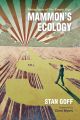
 Mammon’s Ecology
Автор: Stan Goff
Год издания: 0000
Proverbs 22:22 enjoins the reader, «Don't take advantage of the poor just because you can.» Mammon's Ecology is a systematic investigation into the mysterious nature of modern money, which confronts us with the perplexing fact that, in the global economy as it is, we take advantage of the poor whether we want to or not. We destroy natural systems whether we want to or not. Ched Myers describes Mammon's Ecology as a «workbook» about «the secret life of money.» Where Prather and others have shown that money is one of the perverse Powers described in Ephesians 6, Mammon's Ecology details precisely how money exercises this peculiar power and outlines suggestions for Christians who feel trapped in this complicity–not just as individuals, but as church. Mammon's Ecology is not a book about economics (which the author calls «the world's best antidote to insomnia»), but rather a book about the «deep ecology» of (post)modern power and injustice. Read individually or as a group, Mammon's Ecology will leave you unable to think about money the same way again.
 Mammon and Co.
Автор: Эдвард Бенсон
Год издания:
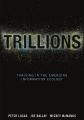 Trillions. Thriving in the Emerging Information Ecology
Автор: Peter Lucas
Год издания:
We are facing a future of unbounded complexity. Whether that complexity is harnessed to build a world that is safe, pleasant, humane and profitable, or whether it causes us to careen off a cliff into an abyss of mind-numbing junk is an open question. The challenges and opportunities–technical, business, and human–that this technological sea change will bring are without precedent. Entire industries will be born and others will be laid to ruin as our society navigates this journey. There are already many more computing devices in the world than there are people. In a few more years, their number will climb into the trillions. We put microprocessors into nearly every significant thing that we manufacture, and the cost of routine computing and storage is rapidly becoming negligible. We have literally permeated our world with computation. But more significant than mere numbers is the fact we are quickly figuring out how to make those processors communicate with each other, and with us. We are about to be faced, not with a trillion isolated devices, but with a trillion-node network: a network whose scale and complexity will dwarf that of today’s Internet. And, unlike the Internet, this will be a network not of computation that we use, but of computation that we live in. Written by the leaders of one of America’s leading pervasive computing design firms, this book gives a no-holds-barred insiders’ account of both the promise and the risks of the age of Trillions. It is also a cautionary tale of the head-in-the-sand attitude with which many of today’s thought-leaders are at present approaching these issues. Trillions is a field guide to the future–designed to help businesses and their customers prepare to prosper, in the information.
 Building Ecology. First Principles For A Sustainable Built Environment
Автор: Peter Graham
Год издания:
Buildings consume 40% of our planet’s materials and 30% of its energy. Their construction uses up to three million tonnes of raw materials a year and generates 20% of the soild waste stream. If we want to survive our urban future, there is no option but to build in ways which improve the health of ecosystems. Understanding the concept of ecological sustainability and translating it into practice as sustainable development is a key challenge for today’s built environment professionals. The skill and vision of those who shape our cities and homes is vital to achieving sustainable solutions to the many environmental, economic and social problems we face on a local, national and global scale. Peter Graham offers here a holistic view of ecologically sustainable building by drawing on established areas of knowledge, demonstrating their relevance to the environmentally-conscious building professional and putting the process, product and impact of building into context. Case studies illustrate how sustainable principles have been applied successfully and discussion topics are offered to stimulate thought. Building Ecology will help planners, surveyors, designers and builders to incorporate sustainability into their everyday practice by: · showing which styles of building are ecologically sustainable · providing fundamental knowledge for making decisions using the principles of ecologically sustainable building · explaining a complex subject in a clear, balanced way. Building Ecology sets out the current scientific view of how nature works and how buildings link with and affect nature. It provides fundamental knowledge for building in harmony with nature and keeping Earth’s life-supporting ecosystems healthy.
 Studies in Viral Ecology. Animal Host Systems
Автор: Christon Hurst J.
Год издания:
This book explains the ecology of viruses by examining their interactive dynamics with their hosting species (in this volume, in animals), including the types of transmission cycles that viruses have evolved encompassing principal and alternate hosts, vehicles and vectoring species. Examining virology from an organismal biology approach and focusing on the concept that viral infections represent areas of overlap in the ecologies of the involved species, Viral Ecology is essential for students and professionals who either may be non-virologists or virologists whose previous familiarity has been very specialized.
 Political Ecology. A Critical Introduction
Автор: Paul Robbins
Год издания:
This fully updated new edition introduces the core concepts, central thinkers, and major works of the burgeoning field of political ecology. Explores the key arguments and contemporary explanatory challenges facing the sub-discipline Provides the first full history of the development of political ecology over the last century and its theoretical underpinnings Considers the major challenges facing the field now and for the future Study boxes introduce key figures in the development of the discipline and summarize their most important works Fully updated to include recent events, such as the Gulf of Mexico Oil Spill, as well as both urban and rural examples, from the developed and underdeveloped world