|
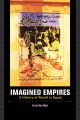
Through a microhistory of a small province in Upper Egypt, this book investigates the history of five world empires that assumed hegemony in Qina province over the last five centuries. <i>Imagined Empires</i> charts modes of subaltern rebellion against the destructive policies of colonial intruders and collaborating local elites in the south of Egypt. <br /><br />Abul-Magd vividly narrates stories of sabotage, banditry, flight, and massive uprisings of peasants and laborers, to challenge myths of imperial competence. The book depicts forms of subaltern discontent against «imagined empires» that failed in achieving their professed goals and brought about environmental crises to Qina province. As the book deconstructs myths about early modern and modern world hegemons, it reveals that imperial modernity and its market economy altered existing systems of landownership, irrigation, and trade— leading to such destructive occurrences as the plague and cholera epidemics. <br /><br />The book also deconstructs myths in Egyptian historiography, highlighting the problems of a Cairo-centered idea of the Egyptian nation-state. The book covers the Ottoman, French, Muhammad Ali’s, and the British informal and formal empires. It alludes to the U.S. and its failed market economy in Upper Egypt, which partially resulted in Qina’s participation in the 2011 revolution. Imagined Empires is a timely addition to Middle Eastern and world history.<br /><br /> Получить ссылку |
 Ancient States and Empires
Автор: John Lord
Год издания:
 Empires of the Dead: How One Man’s Vision Led to the Creation of WWI’s War Graves
Автор: David Crane
Год издания:
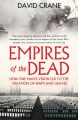
Before WWI, little provision was made for the burial of the war dead. Soldiers were often unceremoniously dumped in a mass grave; officers shipped home to be buried in local cemeteries.The great cemeteries of WWI came about as a result of the efforts of one inspired visionary. In 1914, Fabian Ware, at 45, was too old to enlist. Instead, he joined the Red Cross, working on the frontline in France. There he was horrified by the ignominious end to the lives of many of the soldiers who, buried hastily, were often lost as the battlelines moved backward and forward over the same ground. He recorded their identity and the position of their graves, and his work was quickly officially recognised, with a Graves Registration Commission being set up. As reports of their work became public, the Commission was flooded with letters from grieving relatives around the world.Critically acclaimed author David Crane gives a profoundly moving account of the creation of the great citadels to the dead, which involved leading figures of the day, including Kipling, Lutyens and Gertrude Jekyll. It is the story of both cynical political motivation, as governments sought to justify the sacrifices made, as well as the outpouring of great personal grief, following the ‘war to end all wars’.
 Empires of the Dead: How One Man’s Vision Led to the Creation of WWI’s War Graves
Автор: David Crane
Год издания:
Before WWI, little provision was made for the burial of the war dead. Soldiers were often unceremoniously dumped in a mass grave; officers shipped home to be buried in local cemeteries.The great cemeteries of WWI came about as a result of the efforts of one inspired visionary. In 1914, Fabian Ware, at 45, was too old to enlist. Instead, he joined the Red Cross, working on the frontline in France. There he was horrified by the ignominious end to the lives of many of the soldiers who, buried hastily, were often lost as the battlelines moved backward and forward over the same ground. He recorded their identity and the position of their graves, and his work was quickly officially recognised, with a Graves Registration Commission being set up. As reports of their work became public, the Commission was flooded with letters from grieving relatives around the world.Critically acclaimed author David Crane gives a profoundly moving account of the creation of the great citadels to the dead, which involved leading figures of the day, including Kipling, Lutyens and Gertrude Jekyll. It is the story of both cynical political motivation, as governments sought to justify the sacrifices made, as well as the outpouring of great personal grief, following the ‘war to end all wars’.
Чтобы скачать книгу, отключите блокировку рекламы. Спасибо!
 L'autre monde ou Histoire comique des Etats et Empires de la Lune
 Les Ruines, ou meditation sur les revolutions des empires