|
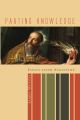
There are forms of knowing that seem either to come from a parting or to require one. Paradigmatically in Genesis, Adam parts from God in order to join in knowledge with his partner, the flesh of his flesh, and the result is a bereft but not unpromising knowledge, looking like a labor of love. Saint Augustine famously–some would say infamously–reads the Genesis paradigm of knowing as a story of original sin, where parting is both damnable and disfiguring and reuniting a matter of incomprehensible grace. Roughly half the essays in this collection engage directly with Augustine's theological animus and follow his thinking into self-division, perversity of will, grief, conversion, and the aspiration for transcendence. The remaining ones, more concerned with grace than with sin, bring an animus more distantly Augustinian to the preemption of forgiveness and the persistence of hell, morality and its limits, sexual piety, strange beauty, and a philosophy that takes in confession. The common pull of all the essays is towards the imperfection in self-knowledge–a place of disfigurement perhaps, but also a nod to transformation. |
 The history of the Royal society of London for the improving of natural knowledge
Автор: Thomas Sprat
Год издания:
 An historical disquisition concerning the knowledge which the ancients had of India
Автор: William Robertson
Год издания:
 Древние знания – на службе современности. Ancient knowledge – to the service of today
Автор: Сергей Иванович Каменский
Год издания: