 Vladimir Putin: Authoritarianism and Anti-Americanism
Автор: United States Department of Defense
Год издания:
Does Vladimir Putin truly hate America? Do the people he presides over truly hate America? This book analyzes modern anti-Americanism in Russia during the era of Vladimir Putin. The main objective of this book is to evaluate Vladimir Putin's anti-Americanism and the domestic political implications of Putinist anti-Americanism within Russia. Contents: Putin's Evolving Anti-Americanism Putin's Hybrid-authoritarian Machine Implications of Russians' Anti-Americanism Putin's Early History Early Life and College Into the Shadows: Putin in the KGB and the Case for a Long Term Cognitive Predisposition Yeltsin Era Putin in the Aftermath of Collapse Russia and the West in the 1990s: U.S. As an Inadvertent Contributor to PutinistAnti-americanism NATO Balkans Economic Collapse and the Absence of U.S. Aid Putin: A Sudden Thrust Into the Limelight Putin's Short-lived Premiership and Acting Presidency Crisis in Chechnya Presidential Election of 2000 Putin's First Presidency Integrate Into or With the West… or Neither? The Attacks of 9/11 and the Aftermath Brotherly Love: Putin and Bush Iraq and a Sudden Turn Against America? Putin's Second Presidency Shift From the West America Inadvertently Plays Into Putin's Hand The Future of U.S. Unilateralism Western Turn by Former Constituent States Critical Reciprocity? Attack on Those Who Criticize Him President to Puppet Master and Back Again: Putin's Recent Premiership and Return to the Presidency Georgia The Obama-Medvedev Reset: Short Lived or DOA? Russian Anti-Americanism: The Man, the Machine, and the Nation The Russian Connection: Anti-Americanism and the Putin-state-polity Link Anti-Americanism's Role in the Future of Russian–American Relations Most Recent Events How Can America Cope?
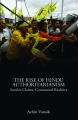 The Rise of Hindu Authoritarianism
Автор: Achin Vanaik
Год издания:
The definitive analysis of Hindu nationalism in contemporary India and the challenges for the radical Left With the Hindu nationalist BJP now replacing the Congress as the only national political force, the communalization of the Indian polity has qualitatively advanced since the earlier edition of this book in 1997. This edition has been substantially reworked and updated with several new chapters added. Hindutva’s rise necessitates a more critical take on mainstream secular claims, ironically reinforced by liberal–left sections discovering special virtues in India’s ‘distinctive’ secularism. The careful evaluation of the ongoing debate on ‘Indian fascism’ has resonances for the broader debate about how best to assess the dangers of the far right’s rise in other liberal democracies. A study follows of how Hindutva forces are pursuing their project of establishing a Hindu Rashtra and how to thwart them through a wider transformative struggle targeting capitalism itself.
 The New Authoritarianism
Автор: Группа авторов
Год издания:
This two-volume book considers from a risk perspective the current phenomenon of the new Alt-Right authoritarianism and whether it represents ‘real’ democracy or an unacceptable hegemony potentially resulting in elected dictatorships and abuses as well as dysfunctional government. Contributing authors represent an eclectic range of disciplines, including cognitive, organizational and political psychology, sociology, history, political science, international relations, linguistics and discourse analysis, and risk analysis. The Alt-Right threats and risk exposures, whether to democracy, human rights, law and order, social welfare, racial harmony, the economy, national security, the environment, and international relations, are identified and analysed across a number of selected countries. While Vol. 1 (ISBN 978-3-8382-1153-4) focusses on the US, Vol. 2 illuminates the phenomenon in the United Kingdom, Austria, France, Germany, Netherlands, Norway, Italy, Hungary, and Russia. Potential strategies to limit the Alt-Right threat are proposed.