|
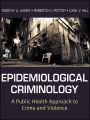
Epidemiological Criminology: A Public Health Approach to Crime and Violence Epidemiological Criminology offers an introduction to the sources and methods of epidemiological criminology and shows how to apply these methods to some of the most vexing problems now confronting researchers and practitioners in public health epidemiology, criminology, and criminal justice. The book describes, explains, and applies the newly formulated practice of epidemiological criminology, an emerging discipline that finds the intersection across theories, methods, and statistical models of public health with their corresponding tools of criminal justice and criminology. The authors show how to apply epidemiological criminology as a practical tool to address population issues of violence and crime nationally and globally. In addition, they look at future directions and the application of this emerging field in corrections, public health and law, gangs and gang violence, victimology, mental health and substance abuse, environmental justice, international human rights, and global terrorism. For students, the book presents an exciting approach to understanding epidemiology as a means with which to tackle some of the worst problems for vulnerable populations. For researchers and policymakers, the book offers a new methodological perspective that recognizes the significance of social disparities and the built environment as factors in the formulation of public health policy, and provides a tool with which to produce more effective interventions, preventive measures, and policy formulations. Получить ссылку |
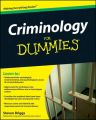 Criminology For Dummies
Автор: Steven Briggs
Год издания:
Your thorough guide to comprehending and combating crime Are you fascinated by criminology, forensics, and detective work? This you-are-there guide takes you deep into the world of crime, giving you a better understanding of the dark recesses of the criminal mind and how law enforcement officials investigate crime. You'll gain real-world knowledge of the reasons for and consequences of crime, the way society responds to it, and, most important, how crime can be prevented. Enter the world of crime – understand what crime is, how it is measured, and the various ways crime affects victims and society Identify different types of crime – from white-collar crime to organized crime to terrorism, examine the nature of crime and why certain criminals are attracted to specific crimes Know who commits crimes, and why – explore different theories that attempt to explain why people commit crimes Take it to the streets – follow law enforcement officials and federal agencies as they chase and apprehend the bad guys Seek justice – meet the key players in the criminal justice system and see why and how the guilty are punished Deal with juveniles – know the differences between adult and juvenile systems, realize why youths are treated differently, and review modern methods for treatment Open the book and find: Common criminal traits The causes of violent crimes Recent efforts to secure victims' rights The processes used to solve crimes A step-by-step walkthrough of the criminal justice process Ways to recognize and fight back against crime Jobs in the criminal justice field Ten notorious, unsolved crimes
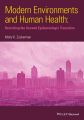 Modern Environments and Human Health. Revisiting the Second Epidemiological Transition
Автор: Molly Zuckerman K.
Год издания:
Written in an engaging and jargon-free style by a team of international and interdisciplinary experts, Modern Environments and Human Health demonstrates by example how methods, theoretical approaches, and data from a wide range of disciplines can be used to resolve longstanding questions about the second epidemiological transition. The first book to address the subject from a multi-regional, comparative, and interdisciplinary perspective, Modern Environments and Human Health is a valuable resource for students and academics in biological anthropology, economics, history, public health, demography, and epidemiology.
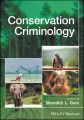 Conservation Criminology
Автор: Группа авторов
Год издания:
This important new text introduces conservation criminology as the interdisciplinary study of environmental exploitation and risks at the intersection of human and natural systems. Taking an interdisciplinary approach, the book enhances understanding of the various human and organizational behaviors that pose risks to the environment, humans, and drive conservation crime. As human population growth, global market economies, climate change, deforestation, and illegal exploitation of natural resources continue to increase, academic research from numerous disciplines is needed to address these challenges. Conservation Criminology promotes thinking about how unsustainable natural resources exploitation is a cause and a consequence of social conflict. Case studies profiled in the book demonstrate this cause and effect type situation, as well as innovative approaches for reducing risks to people and the environment. This text encourages readers to consider how humans behave in response to environmental risks and the various mechanisms that constitute effective and ineffective approaches to enforcement of wildlife crimes, including environmental and conservation policy. Case studies from the USA, Latin America, Africa, and Asia highlight corruption in conservation, global trade in electronic waste, illegal fishing, illegal logging, human-wildlife conflict, technology and space, water insecurity, wildlife disease, and wildlife poaching. Taken together, chapters expand the reader’s perspective and employ tools to understand and address environmental crimes and risks, and to provide novel empirical evidence for positive change. With established contributors providing interdisciplinary and global perspectives, this book establishes a foundation for the emerging field of conservation criminology.
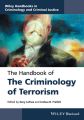 The Handbook of the Criminology of Terrorism
Автор: Группа авторов
Год издания:
The Handbook of the Criminology of Terrorism features a collection of essays that represent the most recent criminological research relating to the origins and evolution of, along with responses to, terrorism, from a criminological perspective. Offers an authoritative overview of the latest criminological research into the causes of and responses to terrorism in today’s world Covers broad themes that include terrorism’s origins, theories, methodologies, types, relationship to other forms of crime, terrorism and the criminal justice system, ways to counter terrorism, and more Features original contributions from a group of international experts in the field Provides unique insights into the field through an exclusive focus on criminological conceptual frameworks and empirical studies that engage terrorism and responses to it
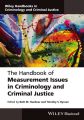 The Handbook of Measurement Issues in Criminology and Criminal Justice
Автор: Группа авторов
Год издания:
This volume of the series was designed to provide a comprehensive primer on the existing best practices and emerging developments in the study and design research on crime and criminology. The work as a whole includes chapters on the measurement of criminal typologies, the offenders, offending and victimization, criminal justice organizations, and specialized measurement techniques. Each chapter is written by experts in the field and they provide an excellent survey of the literature in the relevant area. More importantly, each chapter provides a description of the various methodological and substantive challenges presented in conducting research on these issues and denotes possible solutions to these dilemmas. An emphasis was placed on research that has been conducted outside of the United States and was designed to give the reader a broader more global understanding of the social context of research. The goal of this volume is to provide a definitive reference for professionals in the field, researchers, and students. This volume in the Handbooks in Criminology and Criminal Justice series identifies the principal topical areas of research in this field and summarizes the various methodological and substantive challenges presented in conducting research on these issues. In each chapter, authors provide a summary of the prominent data collection efforts in the topical area, provide an overview of the current methodological work, discuss the challenges in the measurement of central concepts in the subject area, and identify new horizons emerging in data collection and measurement. We encouraged authors to discuss work conducted in an international context and to incorporate discussion of qualitative methodologies when appropriate.
Чтобы скачать книгу, отключите блокировку рекламы. Спасибо!